Tabla de contenidos
We explain how probiotics can help improve abdominal bloating.
1. They compete with bacteria that over-ferment
Some strains displace gas-producing or pro-inflammatory bacteria, which helps reduce bacterial overgrowth and, consequently, abdominal distension.
Useful examples:
-
Bacillus coagulans (Lactospore®): spore-forming strain, ideal for sensitive intestines and resistant to passage through the stomach. It helps intestinal transit and improves motility.
-
Saccharomyces boulardii: probiotic yeast that competes with non-fermenting pathogens, making it especially useful even in cases with SIBO.
2. They reduce intestinal inflammation
Other strains can decrease inflammatory molecules such as IL-6 or TNF-α, helping restore intestinal integrity. This reduces edema, hypersensitivity, and bloating.
Useful examples:
-
Lactobacillus plantarum (LP299v): widely studied for distension and intestinal permeability.
-
Bifidobacterium lactis: strengthens the intestinal barrier and modulates inflammation.
Did you know...? A permeable intestinal barrier can allow toxins or bacteria to pass into the bloodstream, triggering systemic inflammation and chronic fatigue.
3. They produce short-chain fatty acids (SCFA)
These compounds, such as butyrate, are key for colon health:
-
They nourish intestinal cells (colonocytes)
-
They modulate intestinal pH
-
They promote a less fermentative environment
Examples:
-
Bifidobacterium lactis and Bifidobacterium longum produce SCFA when fed fibers such as inulin or guar gum.
But note: in cases of SIBO or FODMAP intolerance, these fibers can worsen bloating. The use of prebiotics should be tailored to the degree of dysbiosis or intestinal permeability, since in phases of active inflammation or bacterial overgrowth even the most beneficial fibers can become counterproductive. In these cases, it is better to avoid them at the beginning and reintroduce them gradually with the help of a healthcare professional.
4. They stimulate bowel transit
Slow motility favors excessive fermentation. Some strains can improve peristalsis and reduce bloating associated with constipation or slow transit.
Useful examples:
Saccharomyces boulardii: regulates both diarrhea and functional constipation.
Lactobacillus plantarum: improves sensitivity and motility.
Choose wisely: not all probiotics are right for you
Although these strains have shown benefits, they do not work equally for all people or in all contexts. That is why it is essential to adapt the probiotic to the individual situation.
When might probiotics not suit you well?
-
If you have SIBO (especially the fermentative type)
-
If you have intolerance to prebiotics or FODMAPs
-
If there is active inflammation or intestinal permeability
In these cases, one starts with neutral or spore-based formulas (such as Bacillus coagulans or S. boulardii), avoiding fermentable fibers, and progresses gradually.
Did you know...? Some people feel more bloated when taking probiotics because the introduced bacteria produce gases as they feed. That is why tolerance is so variable, and the type and dose must be adjusted.
So, which probiotic is best for you?
There is no single answer. There are general patterns, but the details of each case completely change the approach:
-
Do you have SIBO? And of what type?
-
Does constipation or diarrhea predominate?
-
Is there intestinal permeability or autoimmune conditions?
-
How are your diet, your rest, and your stress level?
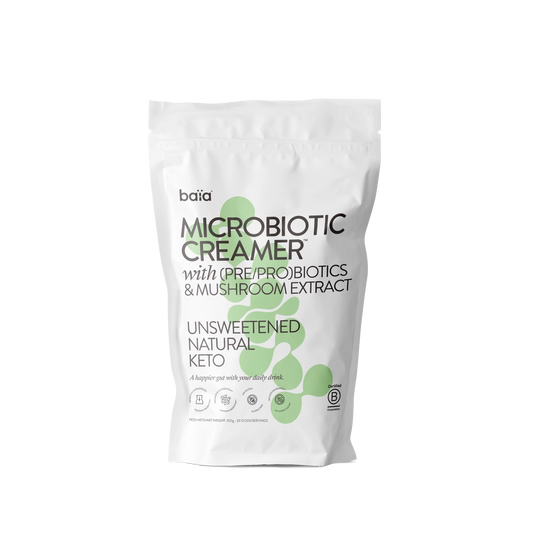
A good probiotic like the one that contains Microbiotic Creamer can help you a great deal. But a poorly chosen one can worsen your symptoms. That is why, if you have recurrent bloating, the best thing is to seek professional guidance and personalize the treatment.
Did you know that...? Chronic stress and dysfunction of the HPA axis (hypothalamic-pituitary-adrenal) can reduce intestinal motility, decrease gastric acid production, and alter the microbiota. That is why addressing bloating from an integrative approach also involves taking care of your rest, your nutrition, and your stress level.
Abdominal bloating is not normal, even if it is common. And probiotics can be a powerful tool to reduce it... if they are chosen wisely.
Listen to your body, adjust your intestinal environment, take care of your diet, and choose supplements that truly adapt to your current state. If you do not know, do not hesitate to go to a specialized professional. That is how you can go from feeling bloated every day to recovering your digestive well-being.