What is the relationship between the microbiota and depression?
for Baia Food en Oct 13, 2025
Tabla de contenidos
The connection between gut health and mood has attracted a great deal of attention in recent years. In particular, the relationship between microbiota and depression is an increasingly relevant area of study in the field of mental health.
Recent research has shown that what happens in our intestines can have a direct impact on our emotional well-being and, in fact, intestinal dysbiosis (an imbalance in the microbiota) could be involved in the onset and maintenance of depression.
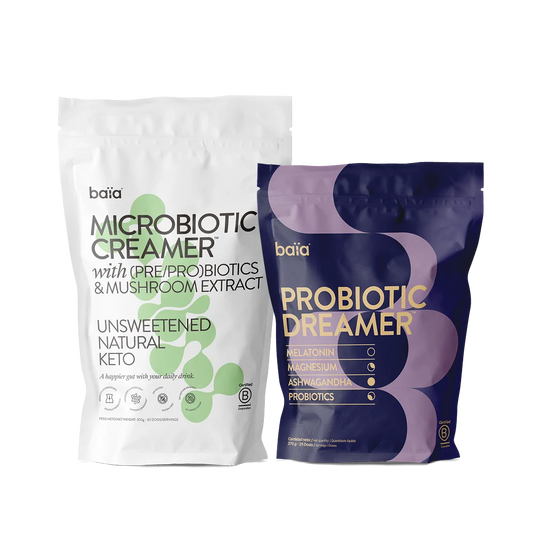
As experts in gut microbiota, we have developed a supplement that helps improve your overall and emotional well-being. We are talking about Probiotic Dreamer™.
Probiotic Dreamer™ is the only supplement that not only addresses sleep from a traditional approach, but also takes into account a fundamental aspect: the gut and its microbiota.
The gut-brain axis: a bridge between the gut and the brain
The gut-brain axis is a bidirectional communication system between the gastrointestinal tract and the brain, which plays a fundamental role in regulating emotions and mental health. This communication takes place through neural, endocrine, and immune pathways, and the gut microbiota has an essential role in this process.
When the microbiota is imbalanced, it can alter the production of key neurotransmitters such as serotonin, a neurotransmitter fundamental to mood regulation.
Probiotic Dreamer™ can be of great help in balancing your gut microbiota, contributing to serotonin production and improving your emotional well-being. With its probiotic and magnesium formula, it will help you maintain the balance needed for a more stable mood.
Connection mechanisms: how the microbiota affects depression
-
Neurotransmitters: The gut microbiota produces and modulates chemicals that affect brain function, such as serotonin. Approximately 90% of serotonin is produced in the gut, which underscores the importance of a healthy microbiota for balanced mood.
-
Immune response and inflammation: A microbial imbalance can trigger a chronic inflammatory response, which increases intestinal permeability and promotes the onset of inflammatory conditions that directly affect the brain. Inflammation is a key factor in many mental health conditions, including depression.
-
Vagal and circulatory pathway: Communication between the gut and the brain also occurs through the vagus nerve and the bloodstream. These pathways allow signals from the gut microbiota to reach the brain, influencing emotional and cognitive states.
Therapeutic implications: can diet improve depression?
Treatment of depression and the microbiota could go beyond traditional medication-based approaches. There is evidence that modulating the gut microbiota through dietary changes and the administration of probiotics may help improve depressive symptoms.
Diet and probiotics: a promising approach
Studies suggest that a diet rich in prebiotic fiber and foods that support a healthy microbiota may contribute to improved mental health. Foods such as fruits, vegetables, and whole grains are essential for maintaining a balanced microbiota. In addition, probiotics such as Lactobacillus helveticus and Bifidobacterium longum have shown positive effects in reducing symptoms of depression.
Probiotic Dreamer™ is formulated with probiotics and other ingredients that support intestinal balance, helping not only to improve digestion, but also to alleviate emotional symptoms related to depression.
Future therapies: new horizons in the treatment of depression
Understanding how the gut microbiota influences depression and the microbiota could open new avenues for the treatment of mood disorders. Researchers are working on developing therapies based on microbiota modulation, which could become an alternative or complement to traditional treatments.
Conclusion: The power of the microbiota in mental health
The relationship between the microbiota and depression is complex and bidirectional. Not only can an imbalance in the microbiota predispose a person to depression, but depression itself can alter the composition of the microbiota, perpetuating the cycle.
As research advances, new therapeutic possibilities are emerging that could transform the treatment of depression. Adopting a balanced diet and considering the use of probiotics could be a step toward better mental and emotional health.
Some frequently asked questions from our customers:
1. How does the gut microbiota affect depression?
The gut microbiota influences the production of neurotransmitters such as serotonin, which regulates mood. A microbial imbalance can trigger an inflammatory response and affect brain function, contributing to depression.
2. Can diet influence my microbiota and improve my mood?
Yes, a diet rich in prebiotic fiber and foods that support a balanced microbiota can help improve communication between the gut and the brain, which could have a positive impact on symptoms of depression.
3. Can probiotics help treat depression?
Studies suggest that certain probiotics, such as Lactobacillus helveticus and Bifidobacterium longum, may have positive effects in reducing symptoms of depression by balancing the gut microbiota.
This article underscores the importance of the microbiota and depression and how a healthy gut can positively influence mental health. Caring for our microbiota through an appropriate diet and the use of probiotics such as Probiotic Dreamer™ could be key to improving our emotional well-being.