Tabla de contenidos
Sleeping well should not be something exceptional, but for many people it is.
Some people take hours to fall asleep. Others wake up in the middle of the night with a racing mind. Some get up exhausted, even though they have slept 8 hours.
And many of them end up turning to supplements —some natural, others not so much— in search of a solution.
But do all sleep supplements really do what they promise?
And how do you choose one that helps you without disrupting your biology or creating more imbalance?
Today I want to tell you what a good sleep supplement should have (and what it should not), in which cases they can help, and when it is advisable to look beyond the symptom and examine the full picture.
Not everyone needs the same thing to sleep
Sleeping poorly is not a diagnosis; it is a symptom.
And it can have very different causes: from mental stress or hormonal dysregulation, to digestive issues, low-grade inflammation, or lack of exposure to natural light.
That is why there is no single supplement that works for everyone.
Over the years in my practice, I have seen people who do not sleep well because of:
-
having the nervous system in a constant state of alert
-
not producing enough melatonin
-
presenting GABA resistance (the neurotransmitter that inhibits brain activation)
-
suffering from SIBO, dysbiosis, or alterations in the gut microbiota
-
being in vulnerable hormonal phases (PCOS, perimenopause, pregnancy, postpartum...)
The key is not to sleep more, but to help the body enter deep rest, the state in which neuronal cleansing, immune regulation, metabolic repair, and emotional stabilization take place.
What really makes a sleep supplement effective?
A good supplement does not aim to “knock you out” as if you were flipping a switch.
It seeks to create the necessary physiological conditions for the body to relax, disconnect, and naturally enter sustained, restorative sleep.
This means acting on several pathways at the same time:
Regulating mental hyperarousal
For those who go to bed with an overactive mind, it is essential to calm the HPA axis (hypothalamic-pituitary-adrenal) and help the brain slow down.
This is where certain adaptogens such as ashwagandha
Support neurotransmitters such as GABA, serotonin, and melatonin
When magnesium is provided in well-absorbed forms such as magnesium acetyl taurate (ATA-Mg®), it contributes to neuromuscular relaxation and supports GABA synthesis without laxative effects or residual drowsiness.
Plant-based melatonin (such as Melostacio™, extracted from pistachio) helps restore the sleep-wake rhythm without interfering with hormonal balance, as can happen with synthetic melatonin.
Take care of the microbiota to regulate from the ground up
The relationship between gut, sleep, and emotional state is more than established.
Balanced gut bacteria produce signals that calm the nervous system, modulate inflammation, and support the production of serotonin, a direct precursor of melatonin.
Here, postbiotics such as Lactobacillus gasseri CP2305® act as neuroactive messengers that help modulate the gut-brain axis without the need to colonize.
And prebiotics such as inulin and FOS provide the necessary nourishment for those bacteria, although they are not suitable for everyone (especially in cases of SIBO or fructose intolerance).
And don't forget: not all ingredients are for everyone
A formula may be excellent... but not for you, if it does not take your context into account.
For example:
-
FOS can worsen abdominal bloating if there is SIBO or excessive fermentation.
-
The melatonin, even in its plant-based version, may not be indicated in people with genetic polymorphisms in the MTNR1B receptors or in its hepatic metabolism (CYP1A2), causing night awakenings or sleep-maintenance insomnia.
-
The ashwagandha, although effective for modulating stress, may be too activating if there is hyperthyroidism or in people who are highly sensitive to adaptogens.
Is there a supplement that has everything well designed?
To this day, there are few formulas that combine, in a logical and physiological way, ingredients that work across all these levels at once: nervous system, HPA axis, circadian rhythm, microbiota, and neurotransmitters.
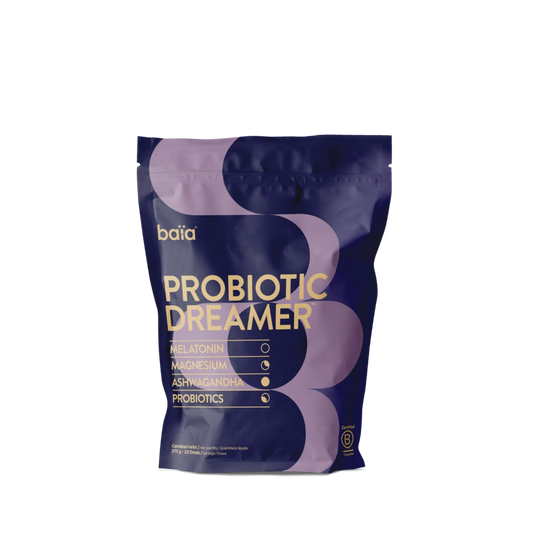
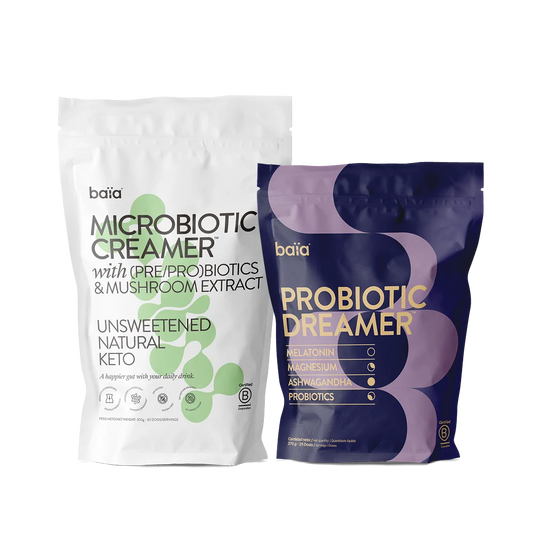
One of them is Probiotic Dreamer™ , a combination designed to support rest from the root, without forcing the body to sleep, but rather helping it do so on its own.
Contains:
-
Neuroactive postbiotics (L. gasseri CP2305®)
-
Plant-based melatonin (Melostacio™)
-
Ashwagandha KSM-66®
-
Magnesium in the form of ATA-Mg® and citrate
-
Prebiotics (inulin and FOS – Orafti®)
I always recommend considering this type of formula as part of a broader approach, including lifestyle, exposure to natural light, regular schedules, nutrition, and professional guidance.
Conclusion: the best supplement is the one that respects your biology
Sleeping well is not about "switching off."
It is about restoring a cycle that is designed to turn on and off on its own, if we provide the right conditions.
The best supplement is not the strongest, nor the one with the most ingredients, nor the one that puts you to sleep the fastest.
It is the one that understands how your body works and supports it without invading it.
And sometimes, that balance begins long before you close your eyes: it starts in the gut, in how you manage the day… and in how you choose to care for yourself at night.