


MILK: THE “SUPERFOOD”
That does not bring us into agreement
By Loan Bensadon
Co-founder and pharmacist

While some highlight its benefits for bone health and growth, others question its consumption in adults due to possible digestive or inflammatory effects. Although there is no absolute scientific consensus, milk remains a nutritious source that is difficult to replace in our society.
Breast milk is a complete and dynamic food, designed to meet the baby’s needs at every stage. It provides essential nutrients, natural defenses, vitamins, minerals, polyunsaturated fatty acids, high-quality proteins, and prebiotics such as HMO (Human Milk Oligosaccharides), which are fundamental for the development of a healthy gut microbiota in the first months of life.
To digest lactose (the main sugar in milk), we need an enzyme called lactase, which we produce in large amounts during childhood. But in many people, this production declines over the years, which can lead to lower tolerance to lactose in adulthood.
So why do so many adults still drink milk without any problem? Because of evolution. About 10,000 years ago, when food was scarce, milk from domesticated animals became an accessible and nutritious source. In some human populations, mutations appeared that allowed continued lactase production after weaning. This advantage was so useful for survival and reproduction that it was passed down from generation to generation.
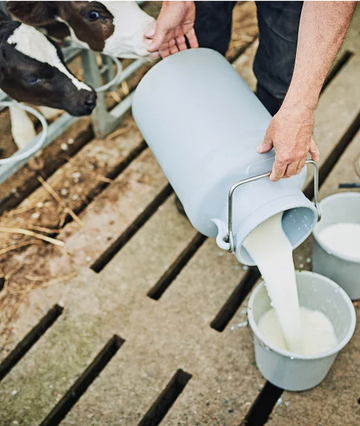
Today, thanks to this genetic adaptation, it is estimated that around 35% of the world’s population can continue producing lactase in adulthood. In Spain, that proportion is even higher, reaching 1 in 2 adults. If you are among them, cow’s milk is likely to cause you no digestive problems. If not, there are many lactose-free alternatives that may suit you better and adapt better to your needs.
Milk is no longer what it used to be
When we talk about milk and digestion, we usually focus on lactose, but there is another important player in this story: casein, one of the main proteins in milk. Within this group, the most relevant is beta-casein, which can occur in two different forms: A1 and A2. This protein represents almost 80% of the total proteins in milk, and not all versions behave the same in our body.
For millennia, cows (and other animals such as sheep or goats) have naturally produced milk rich in beta-casein A2, a form more similar to the one found in breast milk.
But with domestication and the selective breeding of dairy cattle (with the aim of producing more milk, not better milk), the production of milk rich in beta-casein A1 was favored, the less digestible form for humans. This variant, although nutritious, appears to cause more digestive discomfort in some people.
For this reason, it is not uncommon for those who believe they have lactose intolerance to actually feel much better when consuming goat’s or sheep’s milk. These alternatives often cause less bloating, better digestion, and less inflammation.¹

WHOLE MILK AND FULL FAT, PLEASE!
For years, we have waged war on fat. In the midst of that widespread fear, whole milk was one of the first products to be rejected. As a result, millions of people began consuming the skimmed version, believing they were doing the right thing for their health.
However, the most recent scientific studies tell a different story. A large part of milk’s benefits comes precisely from its natural fat. Here we find a fatty acid called CLA (conjugated linoleic acid), with anti-inflammatory properties². Recent studies show that whole milk is associated with better cardiovascular health³ and a lower incidence of overweight⁴. And, contrary to what was believed for decades, we now know that the consumption of skimmed milk is associated with a higher risk of obesity and worse metabolic health².
Everything suggests that fat, when it is naturally derived and consumed in moderation, can be beneficial for health. And that should not surprise us. So why do we still choose skimmed or semi-skimmed? Out of fear. Fear of fat, calories, and cholesterol.
But perhaps it is time to reconcile ourselves with whole milk, as it is produced naturally.
So, if you are going to drink milk, let it be whole. And without guilt.
RAW MILK:
MORE NATURAL! MORE HEALTHFUL?
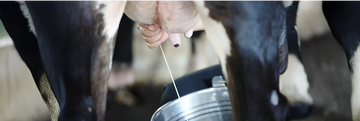
Raw milk (unpasteurized) has been consumed for centuries and is now back in fashion (and not just in rural areas!). It is said to retain more vitamins, active enzymes, and live probiotics, and that this could make it easier to digest or even more nutritious.
However, the scientific evidence does not support these supposed benefits. It has not been shown that raw milk reduces symptoms in people with lactose intolerance⁶, nor that it strengthens the immune system more. In contrast, it has been shown that it may contain pathogenic microorganisms that
they represent a risk of poisoning or infection, especially for vulnerable people⁷.
That is why pasteurization was developed: a simple process that heats milk just enough to eliminate harmful bacteria, without significantly altering its taste or its macronutrients⁵.
If what you are looking for is to consume more probiotics, it is much safer and more effective to obtain them from fermented foods such as yogurt, kefir, kombucha, sauerkraut, or even pickled foods such as olives and pickles.
Debunking health myths
Milk strengthens bones
It is true: your bones are made, to a large extent, of calcium. In fact, 99% of the calcium in your body is found there, giving them rigidity and structure. That is why, for years, milk (rich in calcium) has been promoted as a protector of bone health.
But there is an important detail that is often overlooked: calcium alone is not enough.
Without enough vitamin D, that calcium is not well absorbed, nor is it fixed into the bones. In other words, it is lost. Vitamin D, in addition to supporting the immune system, promotes the absorption of calcium and phosphorus, maintains normal blood calcium levels, and contributes to bone health, which directly influences the risk of fractures⁹.
So, is milk good for bones or not? Science does not agree. Some studies associate it with more fractures², others with a lower risk of osteoporosis³. The truth is that the link between milk, calcium intake, and bone health… is still not entirely clear. The good news? There are milks fortified with vitamin D!
1. Holick, M. F. (2007). Vitamin D deficiency. The New England Journal of Medicine, 357(3), 266–281. https://doi.org/10.1056/NEJMra070553
2. Michaëlsson, K., Wolk, et al (2014). Milk intake and risk of mortality and fractures in women and men: cohort studies. BMJ (Clinical Research Ed.), 349(oct27 1), g6015. https://doi.org/10.1136/bmj.g6015
3. Wadolowska, L., Sobas, et al. (2013). Dairy products, dietary calcium and bone health: possibility of prevention of osteoporosis in women: the Polish experience. Nutrients, 5(7), 2684–2707. https://doi.org/10.3390/nu5072684
Gut health
Fermented dairy products:
THE HEALTHY TURN
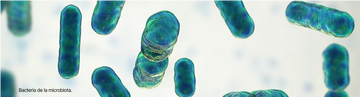
Yogurt, kefir, fermented cheeses... They are not only easier to digest for people with lactose intolerance. They are also true allies of your microbiota. The science is clear: fermented dairy increase intestinal microbial diversity¹ ², a key indicator of a balanced, diverse, and protective microbiota.
Kefir is a good example. Its probiotic profile is unique: it combines bacteria and yeasts that are not found in other dairy products and that, moreover, have antimicrobial effects³.
And that is not all. Regular consumption of fermented foods helps strengthen the intestinal barrier⁴, modulates inflammation⁵ and stimulates the production of short-chain fatty acids, compounds that are fundamental for metabolic health.
What is the secret? Do not choose just one. Each fermented food provides different bacteria. The greater the variety, the greater the benefits.
1. González, S., et al (2019). Fermented dairy foods: Impact on intestinal Microbiota and health-linked biomarkers. Frontiers in Microbiology, 10, 1046. https://doi.org/10.3389/fmicb.2019.01046
2. Okoniewski, A., et al (2023). The Role of Fermented Dairy Products on Gut Microbiota Composition. Fermentation, 9(3), 231. https://doi.org/10.3390/fermentation9030231
3. Suhartanti, D., et al (2014). COMPARISON OF THE ANTIBACTERIAL ACTIVITY OF COW MILK KEFIR AND GOAT MILK KEFIR AGAINST BACTERIA Bacillus cereus. Jurnal Kesehatan Masyarakat (Journal of Public Health), 8(2). https://doi.org/10.12928/kesmas.v8i2.1030
4. Kotler, B. M., et al (2013). Claudins, dietary milk proteins, and intestinal barrier regulation. Nutrition Reviews, 71(1), 60–65. https://doi.org/10.1111/j.1753-4887.2012.00549.x
5. Bordoni, A., et al (2017). Dairy products and inflammation: A review of the clinical evidence. Critical Reviews in Food Science and Nutrition, 57(12), 2497–2525. https://doi.org/10.1080/10408398.2014.967385


Bibliography
1. Ho, S., Woodford, K., et al. (2014). Comparative effects of A1 versus A2 beta-casein on gastrointestinal measures: a blinded randomised cross-over pilot study. European Journal of Clinical Nutrition, 68(9), 994–1000. https://doi.org/10.1038/ejcn.2014.127
2. Berkey, C. S., et al (2005). Milk, dairy fat, dietary calcium, and weight gain: a longitudinal study of adolescents: A longitudinal study of adolescents. Archives of Pediatrics & Adolescent Medicine, 159(6), 543–550. https://doi.org/10.1001/archpedi.159.6.543
3. Givens, D. I. (2012). Milk in the diet: good or bad for vascular disease? The Proceedings of the Nutrition Society, 71(1), 98–104. https://doi.org/10.1017/S0029665111003223
4. Vanderhout, S. M., et al (2021). Cow’s milk fat and child adiposity: a prospective cohort study. International Journal of Obesity (2005) , 45(12), 2623–2628. https://doi.org/10.1038/s41366-021-00948-6
5. Bezie, A. (2019). The effect of different heat treatment on the nutritional value of milk and milk products and shelf-life of milk products. A review. Journal of Dairy & Veterinary Sciences, 11(5), 1–8. https://doi.org/10.19080/jdvs.2019.11.555822
6. Mummah, S., et al (2014). Effect of raw milk on lactose intolerance: a randomized controlled pilot study. Annals of Family Medicine, 12(2), 134–141. https://doi.org/10.1370/afm.1618
7. Cerva, C., Bremm, et al (2014). Food safety in raw milk production: risk factors associated to bacterial DNA contamination. Tropical Animal Health and Production, 46(5), 877–882. https://doi.org/10.1007/s11250-014-0580-y
